
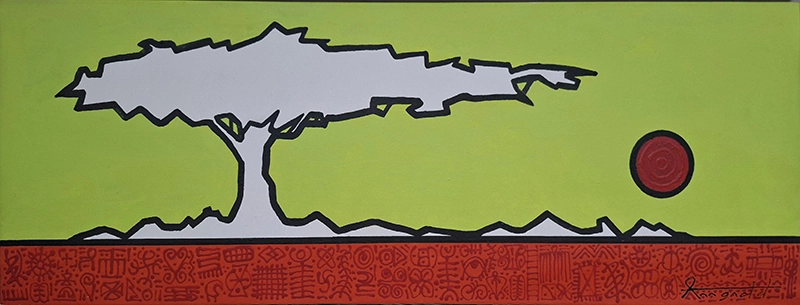
Original painting by a South African artist of an acacia tree. Size 140x50cm
Acacia in Africa (5)
R14,000.00
Description
Acacia in Africa
The strong graphic style of Acacia in Africa completely redefines how we look at the African wilderness. Rather than aiming for realism, Ann Gadd uses flat planes, hard edges, and bold design choices to turn the traditional landscape into a high-impact visual statement. Here is how the graphic style shapes the artwork:
The acacia tree is stripped of intricate botanical detail and reduced to its essential, iconic silhouette.
The Umbrella Canopy: The flat, sweeping top of the tree cuts sharply across the canvas, functioning like a powerful graphic emblem or a modern logo of the savannah.
Compressed Space: There is no traditional atmospheric perspective. The tree and the background exist on a unified visual plane, maximizing the painting’s immediate punch.
Linear Rhythms: Gadd uses clean lines and structured blocks of color to partition the 50×140 cm canvas, giving the wild bush a deliberate, organized layout.
Pop-Art Infused Palette: The choice of electric orange and neon lime green feels closer to screen-printing and modern poster design than classic oil landscaping.
Hard Contrasts: The sharp boundary lines where the blazing orange meets the vibrant lime create a striking optical vibration that immediately draws the eye.
Graphic Glyphs: The ancestral symbols embedded in the paint act like an ancient typography.Imprinted Texture: These motifs are often applied with a clean, stencil-like precision, contrasting beautifully with the expressive, painterly texture of the background layers.
Description of Acacia in Africa
In Acacia in Africa (50×140 cm) by renowned South African artist Ann Gadd, a striking panoramic canvas captures the resilient beauty of the iconic thorn tree against a burning, vivid landscape. Dominated by brilliant hues of energetic orange and sharp lime green, this contemporary mixed-media work merges the raw, baking heat of the African bush with hidden layers of ancient, symbolic meaning.
The Panoramas of the Bush and Compositional Scale
Measuring 50 by 140 centimeters, the canvas utilizes a dramatic, elongated horizontal format. This widescreen layout mimics the endless expanse of the African savannah or the shimmering horizons of the Kalahari and Etosha pans. In a traditional landscape, a wide canvas might invite the eye to wander far into the distance. Here, Ann Gadd instead compresses the atmospheric vastness, turning the long canvas into a rhythmic stage.
The solitary acacia tree anchors the composition. Rather than rendering the tree with botanical precision, Gadd approaches the subject through a semi-abstract lens. The iconic, flattened umbrella canopy stretches across the upper registers of the frame, while the gnarled, dark trunk and delicate branching structure stand resolute. The horizontal stretch emphasizes endurance. The acacia is positioned not merely as a passive part of the scenery, but as a sentinel of survival—a solitary architecture providing the only visual and literal anchor in a sea of raw elements.
The Chromatic Symphony: Orange and Lime
Color is the emotional engine of Acacia in Africa. Eschewing the dull, predictable olive drabs and dusty browns of conventional wildlife art, Gadd injects the scene with a jolt of psychological and visual temperature.
The background radiates a fierce, glowing orange. This is the color of baked earth at high noon, the intense reverberation of a sun-scorched horizon, and the life-giving fire inherent in the African wild. It creates an immediate sensory reaction, making the viewer feel the ambient heat radiating off the canvas.
Counterbalancing this searing warmth are flashes and undertones of lime green. Lime is an unexpected, punchy choice for the African veld—usually associated with new shoots, sudden seasonal rebirth, or the sharp, electric contrast of chlorophyll pushing through adversity. In this painting, the lime cuts through the dominance of the orange like a cool breeze or an alkaline flash of renewal. It highlights the canopy or undercurrents of the design, creating a dynamic optical vibration where the two hues push and pull against each other. This chromatic friction generates a vibrant pulse, ensuring the canvas feels alive rather than static.
Ancient Symbols and Hidden Narratives
A hallmark of Ann Gadd’s contemporary wildlife series is her incorporation of ancestral African symbols into the underpainting and negative spaces. Discovered through her deep fascination with traditional motifs and indigenous heritage, these symbols function as a quiet, visual subtext.
Submerged beneath layers of acrylic and mixed media, symbols representing concepts such as hope, community (ubuntu), endurance, and balance are subtly woven into the orange and lime fields. Gadd treats her canvases as energetic transmitters. She has often noted her belief that art carries a specific frequency into the environment it inhabits.
The integration of these glyphs transforms the landscape from a physical depiction of a tree into a metaphysical map. The symbols act as a quiet chorus whispering through the visual heat, turning the stark wilderness into a space charged with resilience and communal harmony. They remind the viewer that survival in Africa—both for nature and humanity—is rooted in deep historical memory and interconnectedness.
Texture, Technique, and Modern Expression
Gadd’s background as a graphic designer and her extensive career as a prolific South African creative inform the clean yet expressive application of her medium. The surface of Acacia in Africa is richly textured. Brushstrokes are confident and expressive, allowing the under-layers of color to peek through and build an archaeological depth on the flat plane of the canvas.
The interplay between the fluid organic shapes of the acacia branches and the rigid, deliberate geometry of the background patterning showcases a mature balancing act. It is this tension—between raw, untamed wilderness and structured modern design—that defines the painting’s unique aesthetic footprint. The paint is applied with a sense of urgency and joy, reflecting an artist deeply enamored with her subject matter yet unintimidated by traditional rules of representation.
Conclusion
Acacia in Africa is more than a mere depiction of a tree; it is an emotional and chromatic celebration of survival. Through its unusual dimensions, aggressive yet harmonious palette of orange and lime, and the quiet resonance of ancestral symbols, Ann Gadd crafts a love letter to the continent. It stands as a vibrant, enduring beacon of warmth and hope, transforming any interior space it occupies into a place connected to the wild, beating heart of Africa.
The strong graphic style of Acacia in Africa completely redefines how we look at the African wilderness. Rather than aiming for realistic depth, Ann Gadd uses flat planes, hard edges, and bold design choices to turn the traditional landscape into a high-impact visual statement.
Symbolic Stencilling
- Graphic Glyphs: The ancestral symbols embedded in the paint act like an ancient typography.
- Texture: These symbols contrast beautifully with the expressive, painterly texture of the background.
Ancestral Wisdom: The Background Symbols and Their Meanings
The graphic background of Acacia in Africa serves as a modern canvas for an ancient language. Hidden within the bold color fields of orange and lime green are subtle, stencilled African symbols—many inspired by West African Adinkra motifs and indigenous rock art. Rather than being merely decorative, these symbols act as visual blessings, infusing the artwork with deep, positive intentions.
- Aya (The Fern – Symbol of Endurance and Resourcefulness): The fern is a hardy plant that can grow in the most difficult soils. In the harsh African veld, this symbol mirrors the acacia tree’s own ability to thrive against the odds, representing a human spirit that cannot be broken.
- Wawa Aba (Seed of the Wawa Tree – Symbol of Hardiness and Perseverance): The seed of the wawa tree is incredibly tough. In the background, this motif represents grit, structural strength, and the power to overcome tough times through sheer resilience.
- Dwennimmen (Ram’s Horns – Symbol of Humility and Strength): This graphic, looping symbol represents the balance between fierce power and gentle humility. It acts as a reminder that true strength lies in a peaceful, grounded mind.
- Asase Ye Duru (The Earth Has Weight – Symbol of Providence and Divinity): This symbol honors the earth as a life-giver. Woven into the warm orange paint, it serves as a positive affirmation of nature’s bounty, survival, and the ground that sustains us.
By embedding these positive glyphs into the modern design, Gadd turns the painting into a visual talisman. The background does not just show a landscape; it broadcasts a message of hope, strength, and continuous renewal.
See more of Ann’s wildlife art: https://southafricanart.co
See more of Ann’s wildlife art and photography: https://anngaddphotography.myportfolio.com/
See more of Ann’s sheep: https://artforewe.co.za
Additional information
| Weight | 7 kg |
|---|---|
| Dimensions | 150 × 40 × 4 cm |
Reviews
There are no reviews yet.